
“If you think ordinarily, you’ll only do ordinary things. If you want to do extraordinary things, you have to think in extraordinary way” (cit.someone in the world)
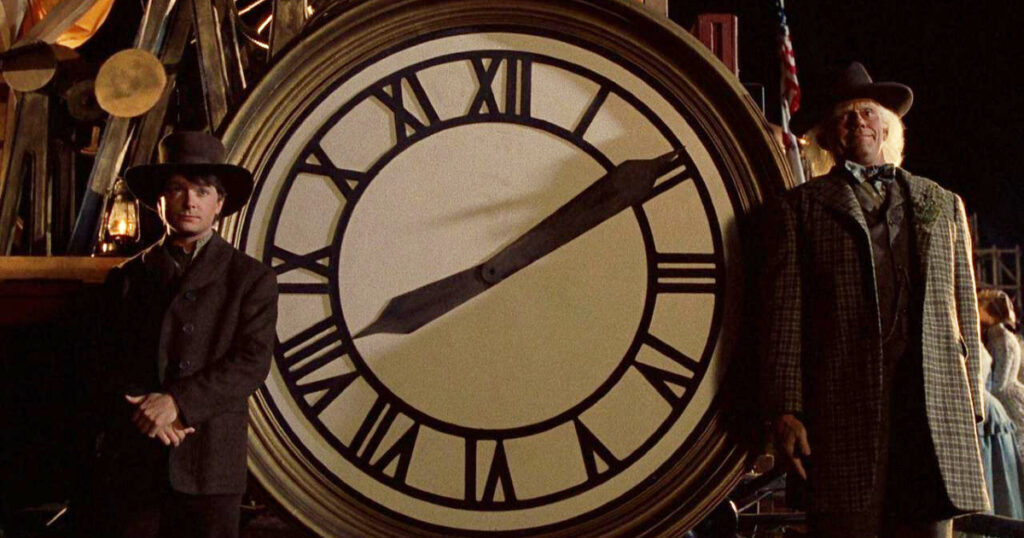
“Ah…if only I could go back. Oh, if only I could go back to that date…”
These are phrases that almost everyone, sooner or later, finds themselves thinking for the most disparate reasons. Let’s leave aside the space-time continuum, otherwise the usual debate about the uncontrollable effects of changing past events will begin. But I, too, have had a phrase like this in my head many times. “If I had done this or that, if it hadn’t rained that day. If I had been calmer that evening…” In short, there are dozens of situations worth thinking about. I have achieved an inner peace that makes me feel balanced, and from that moment on, everything on this journey took shape that I wouldn’t change in any way. And for the same reason, looking back and seeing all the pieces fitting together perfectly to get me where I am, today I can say with conviction and clarity that I would leave “everything exactly as it was2.
That, however, is a vision too closely tied to the highly relativistic concept taught by the eminent Professor Dr. Emmet Brown, according to which nothing of the mosaic we leave behind should be touched. However, if I wanted to take myself a little lightly, and decided to move through the meshes of time with a little more imagination and less bigoted preconceptions, I have a clear idea of the moment in the past I would transport myself to. Without digressing too much into relativistic scenarios, I would project myself onto the scenario I’ve frequently constructed in my imagination, which takes me to 1973. If I could travel back in time, I would seek out the young “my father,” eighteen years old in 1973, and tell him: “When you buy a house, or when you move in, always remember that there must be a garage. And make it spacious.” I would convey this to him with mystical emphasis to attract his attention with some scenario that truly convinces him, that makes him understand that it is essential and that it simply must be done.
Everything start there.
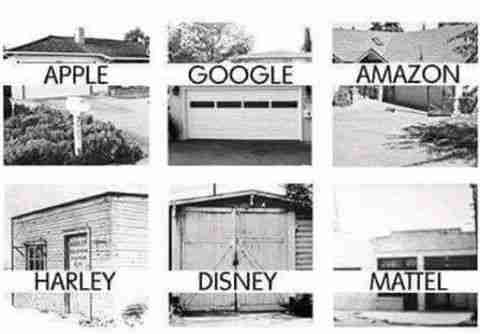
That smell of oil and damp cardboard and paint. It seems obvious, even bordering on silly, yet I’m convinced that if America has always played a role as a trainer in information technology and software, it’s because there are more garages in America than in the rest of the world. It’s in places like this that Jobs and Wozniak assembled the Apple I, laying a cornerstone of the future of economics and technology; Purists would say it was Wozniak who assembled everything and Jobs who built a legend around Apple. The various biographies would partially agree and disagree on more or less everything. It was still in a garage that Gates and Allen, surrounded by tangled cables and empty cans (that’s the image I have in my mind), wrote the code that would change the fate of computing with DOS and Windows. Page and Brin transformed a makeshift search engine into Google, and Bezos stacked boxes of books without imagining he was building a global empire. What can we say about Walt Disney, who animated his first dreams in his uncle’s garage, while Hewlett and Packard, and even the guys at Harley-Davidson, shaped their future with hands stained with grease and hope. Put it however you want, a part of the known world that participated strongly and intensely in the change and development of this era is made up of the few companies mentioned above that had a garage “to make things.” Many stories are unknown, while others are improvised until an official, successful, and authorized version is released. The fact remains that the garage was a hotbed of ideas and a hub for more or less successful opportunities. Now some might be thinking, “Come on, is everything possible in America?” Below is a comprehensive list of programming languages and operating systems, sorted by year and place of birth. You’ll notice that what I say isn’t so far from the truth.
Years’50–’60
- Fortran (1954–56) – John Backus, IBM, New York (USA)
- Lisp (1958) – John McCarthy, MIT, Massachusetts (USA)
- COBOL (1959) – Grace Hopper + CODASYL, USA
- ALGOL (1958–60) – Comitato europeo/americano, Europa + USA
- BASIC (1964) – John Kemeny e Thomas Kurtz, Dartmouth College (USA)
Years’70
- C (1972) – Dennis Ritchie, Bell Labs, New Jersey (USA)
- Prolog (1972) – Alain Colmerauer, Marsiglia (Francia)
- Smalltalk (1972) – Alan Kay, Adele Goldberg, Xerox PARC, California (USA)
- SQL (1974) – Donald Chamberlin e Raymond Boyce, IBM, California (USA)
- Pascal (1970) – Niklaus Wirth, Svizzera
Years’80
- Ada (1980) – Jean Ichbiah, Francia (per il Dipartimento della Difesa USA)
- C++ (1983) – Bjarne Stroustrup, Bell Labs, New Jersey (USA)
- Objective‑C (1984) – Brad Cox, USA
- Perl (1987) – Larry Wall, USA
- Erlang (1986) – Joe Armstrong, Ericsson, Svezia
Years’90
- Haskell (1990) – Comitato accademico internazionale (USA + Europa)
- Python (1991) – Guido van Rossum, CWI, Amsterdam (Paesi Bassi)
- Ruby (1995) – Yukihiro Matsumoto, Giappone
- PHP (1995) – Rasmus Lerdorf, Canada
- Java (1995) – James Gosling, Sun Microsystems, California (USA)
- JavaScript (1995) – Brendan Eich, Netscape, California (USA)
- R (1995) – Ross Ihaka e Robert Gentleman, Nuova Zelanda
- Lua (1993) – Roberto Ierusalimschy, Brasile
Years2000
- C# (2000) – Anders Hejlsberg, Microsoft, Redmond (USA)
- Scala (2003) – Martin Odersky, Svizzera
- F# (2005) – Don Syme, Microsoft Research, Cambridge (UK)
- Swift (2014) – Chris Lattner, Apple, California (USA)
Years2010 – today
- Go (2009) – Griesemer, Pike, Thompson, Google, California (USA)
- Rust (2010) – Graydon Hoare, Mozilla, USA
- Kotlin (2011) – JetBrains, Repubblica Ceca / Russia
- Julia (2012) – Jeff Bezanson, Stefan Karpinski, MIT (USA)
- Elixir (2011) – José Valim, Brasile
Over time, I’ve often wondered why, if someone they invent a programming language, it was invetend in America. While this isn’t always entirely true, it certainly has been that true in the most of the time—just take a look at the list above. And if you consider that the main operating systems were born in the States, and the core of every operating system is still written in English…well, draw your own conclusions. In the years that followed, with the most of programming language that was themeselves invented, the States became the driving force of that world to the point of heavily impacting the economy of planet Earth.
Not that they were necessarily born in a garage; certainly, more comfortable environments were conceived and accepted over time, but the garage has always played a role that ranged from discrete to important.
Over time, I’ve often wondered why, if they invent a programming language, they invent it in America. While this isn’t always entirely true, it certainly has been the case most of the time—just take a look at the list above. And if you consider that the main operating systems were born in the States, and the core of every operating system is still written in English…well, draw your own conclusions. In the years that followed, with what was invented, the States themselves became the driving force of that world, to the point of having a significant impact on the economy of planet Earth.
Not that everyone was necessarily born in a garage; certainly, more comfortable environments were conceived and accepted over time, but the garage has always played a role that ranged from discreet to important.
I had my first garage at 38, and before then, despite there being plenty of space in the houses I lived in, I always lacked something I’d always longed for. Perhaps this is why a strange, almost unjustified sedness for something I never experienced would I felt from time to tim, as if to remind me I needed it. Time, experience, and my own vision of the events that shaped my era led me to see a garage not as a place, but as a symbol of creativity, personal space, and opportunity. This led me to develop the ironic belief that in Italy there aren’t, or haven’t been, enough garages to forge the mettle of young pioneers and give vent to their imaginations. And having a garage wasn’t enough; one might think that perhaps only one garage in a million houses the right minds, allowing the right ideas to be born within its bowels, as happened in Seattle in 1968.
Thanks for your precious time
L.C.


Lascia un commento